Video Production Company in Andheri West Mumbai
If you’re searching for a Video Production Company in Andheri West, Mumbai, you’re probably not looking for “cinematic” buzzwords. You want a team that gets your goal, writes a clean plan, shoots without chaos, and delivers edits that actually help your business (or project) move.
Andheri West is packed with options — studios, freelancers, agencies, and full production houses. The trick is knowing who fits your job, what to ask, and what you should receive at the end so you don’t pay twice (once for the shoot, again to fix the mess).
- Corporate Video Production (Mumbai)
- Brand Films & Ad Films
- Product & E-commerce Videos
- Social Media & Performance Ads

Send Me My Concept in
15 Minutes
Serving Mumbai, Navi Mumbai, Thane & nearby business hubs.
Got an Idea? Let’s Turn It Into a Script Today.
Looking for a video production company in Mumbai that can move fast?
Share your goal—we’ll reply with a concept, timeline, and next steps.
⚡ Best video production company in Andheri West
Let me be honest: “best” depends on your use-case, not their Instagram reel.
Here’s the fastest way to decide if a team is best for you:
What I should check before I shortlist anyone
Relevant samples (same type as yours): corporate film ≠ product shoot ≠ ad film.
Before/after edits: do they improve pacing, clarity, captions, sound?
Process clarity: can they explain steps in plain English?
Real deliverables: do they mention masters, cutdowns, subtitles, versions?
Budget transparency: can they explain what changes cost (and why)?
Video Production Work by Our Andheri West Mumbai Team
Explore corporate videos, product films, ad films, and social campaigns produced in Mumbai. Each project is built around one goal: keep viewers watching and make them act.
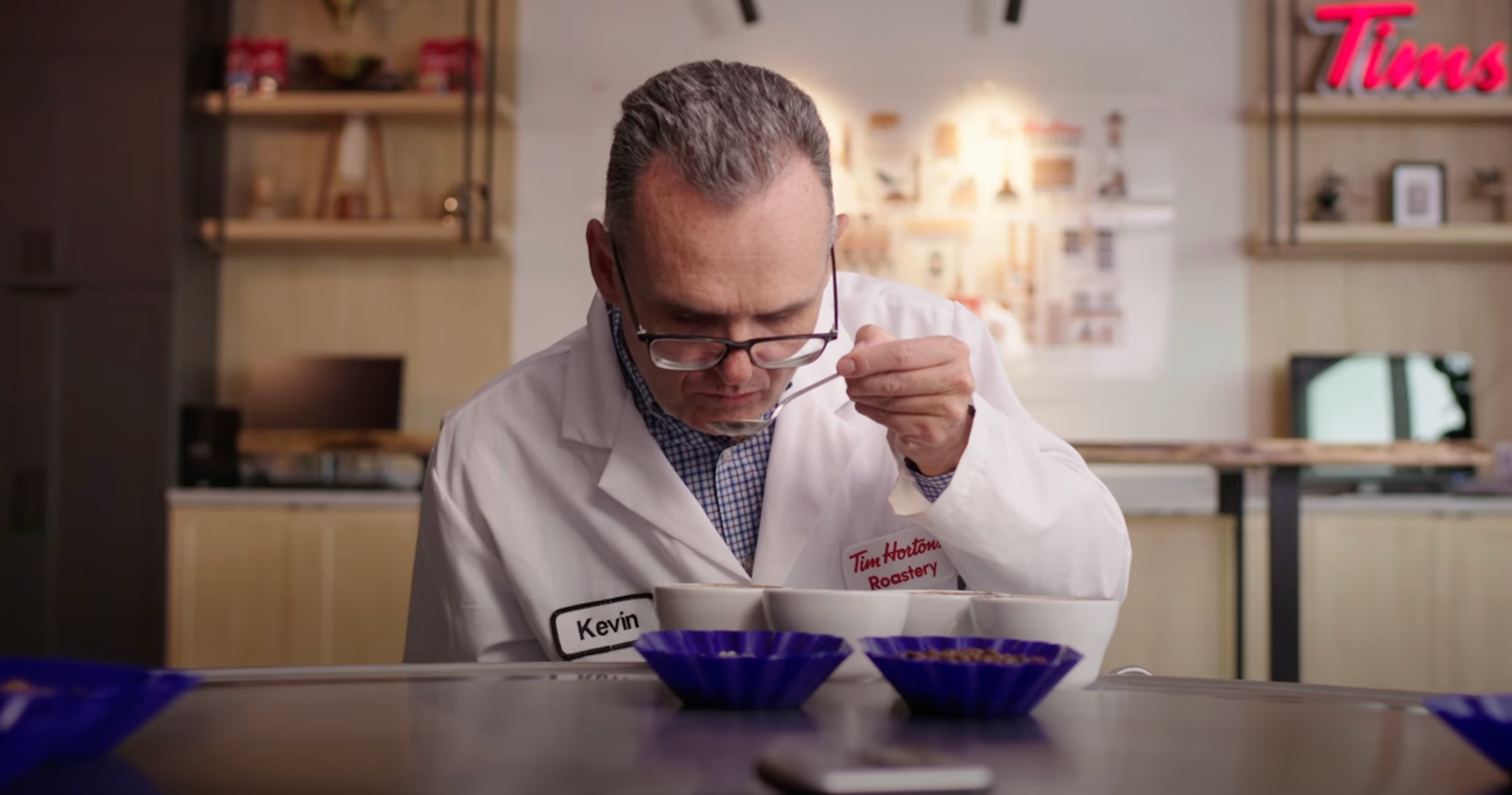

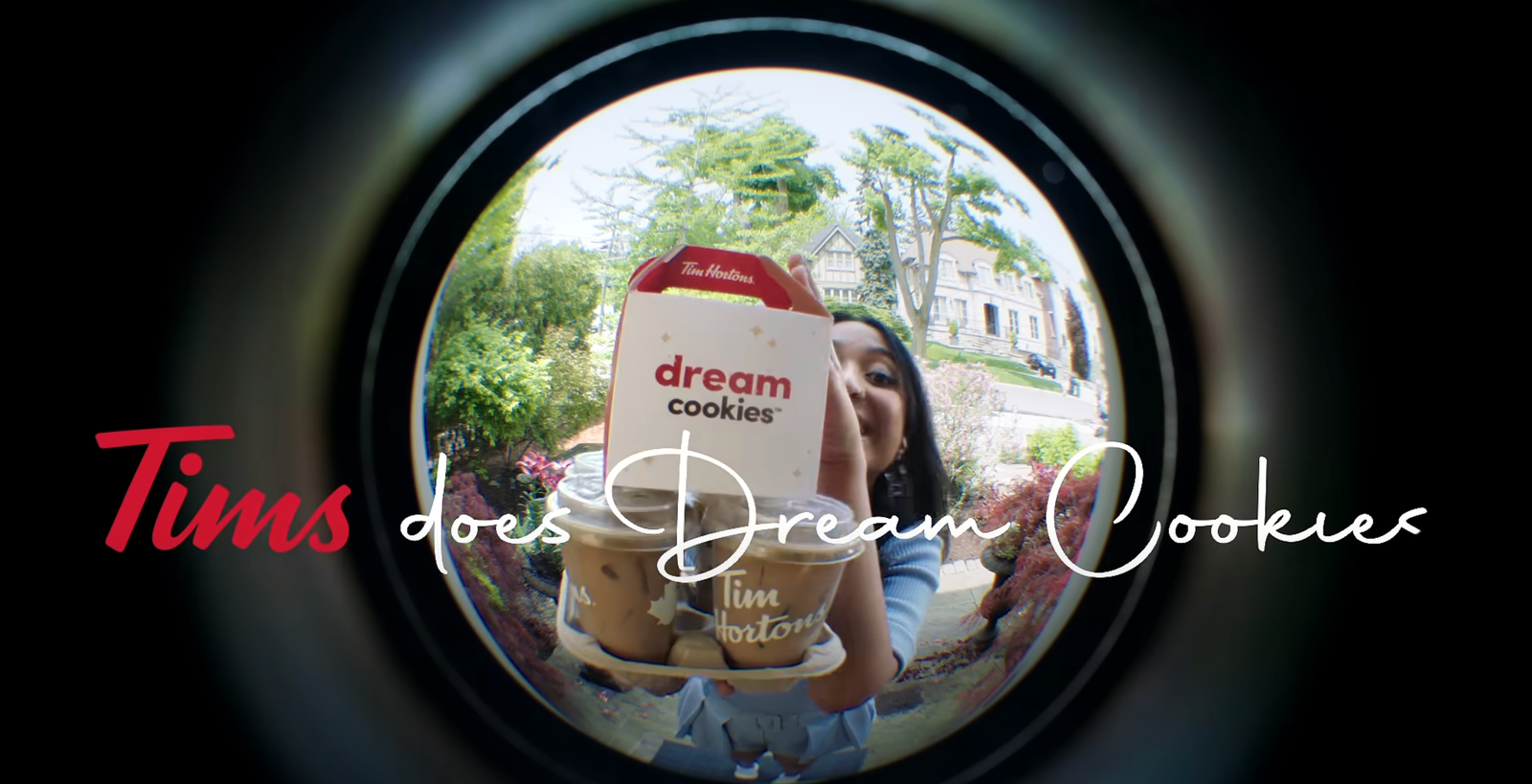
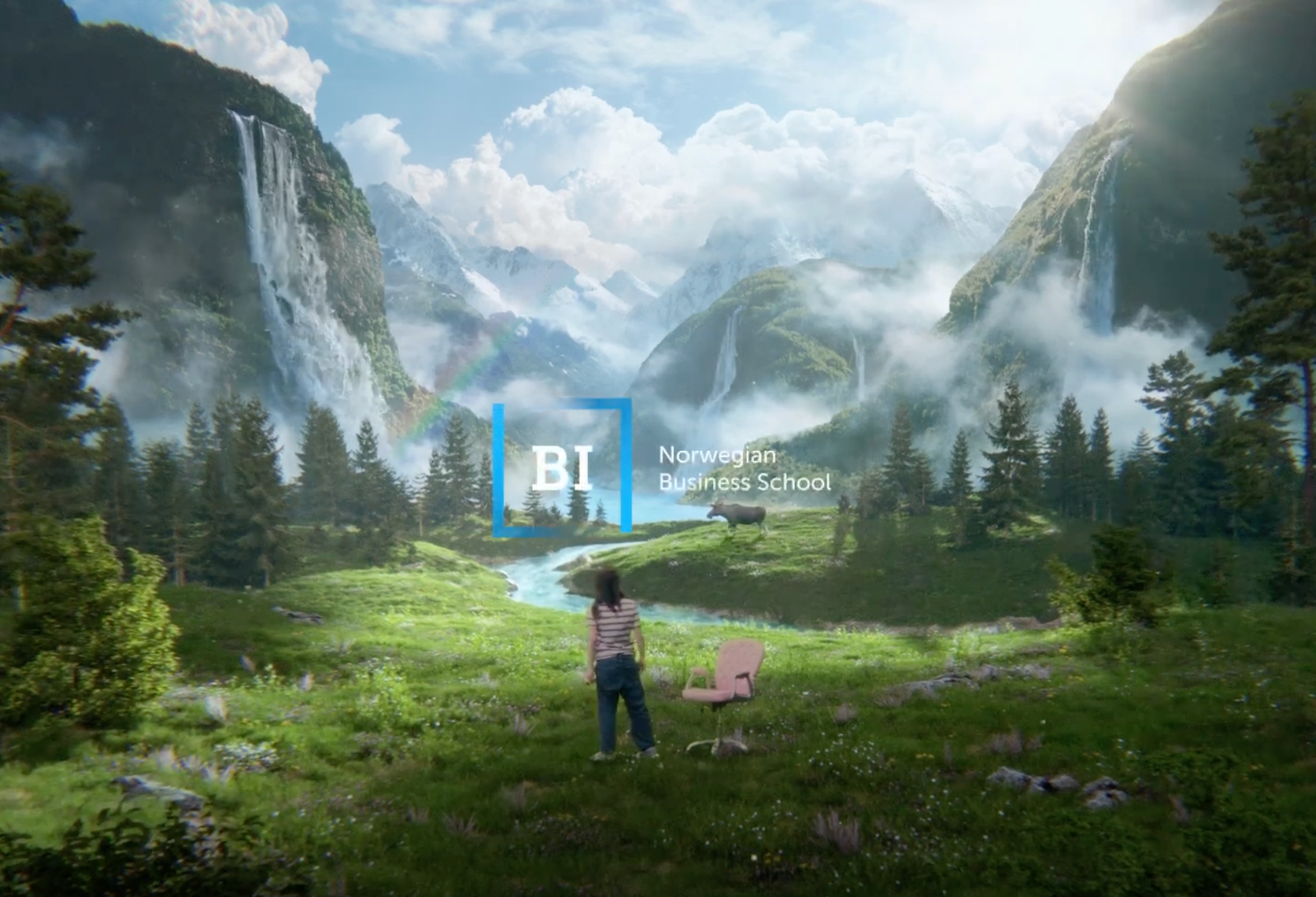
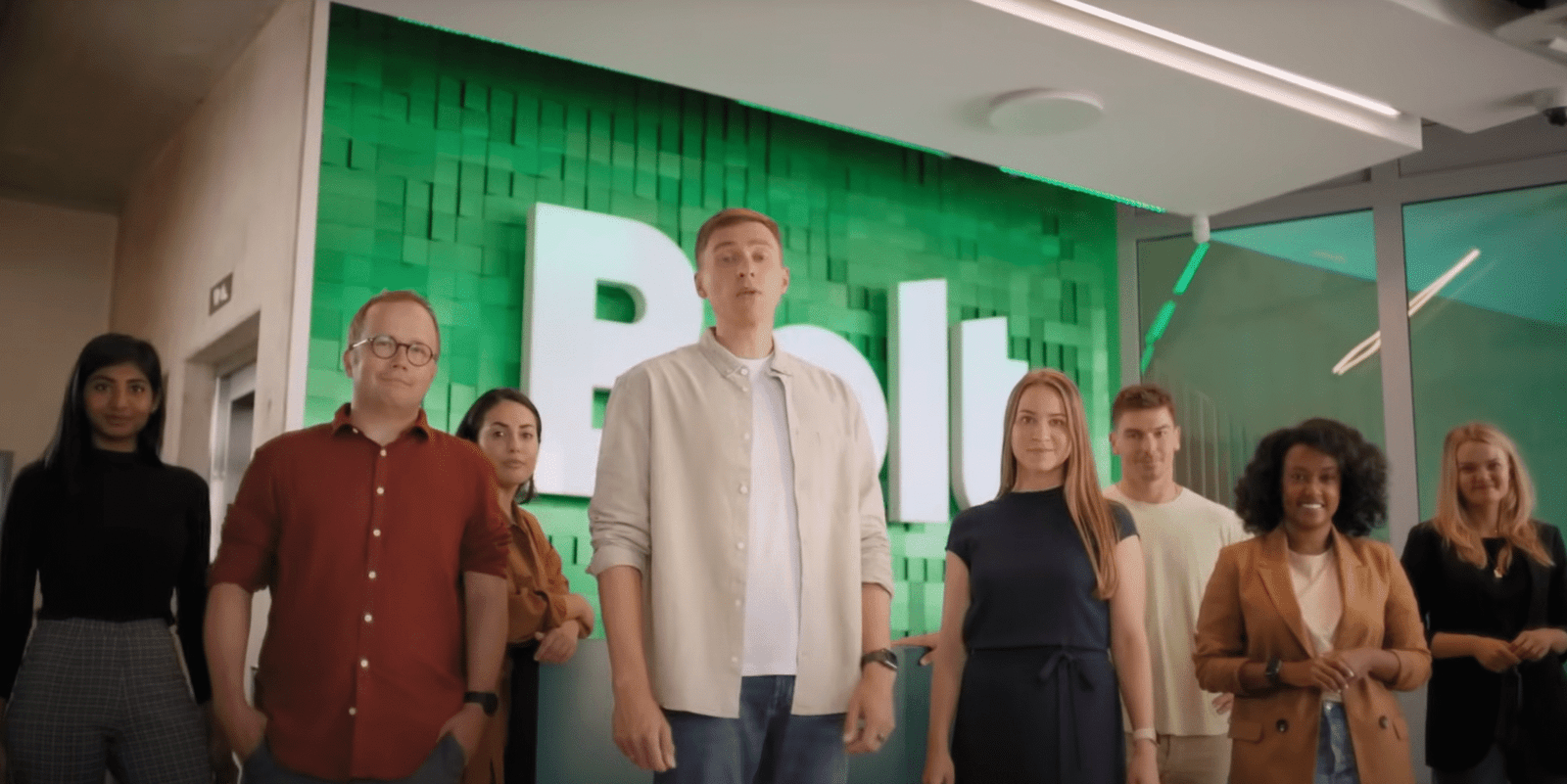
Want similar output for your brand? Get a concept in 15 minutes.
⭐ What Our Clients Say About Stories That Matter
Brands choose us when they want a reliable video production company in Mumbai—clear timelines, clean execution, and strong delivery.
 How to verify/choose safely (proof + red flags)
Quick proof to ask for
2–3 recent projects similar to yours + what the deliverables were
a simple timeline (shoot date + first cut + revision + final)
revision policy in writing (even a WhatsApp message is fine)
who owns the raw footage / project files (this matters)
Red flags (don’t ignore these)
“We’ll decide everything on shoot day” (translation: no planning)
No mention of sound (bad audio kills credibility)
Only 1 deliverable promised (“final video”) with no formats/ratios
Portfolio is pretty but no business context (no problem-solving)
Expert tip: A good team asks you questions first: audience, platform, CTA, tone, references, deadline, approvals. If they don’t, expect a generic output.
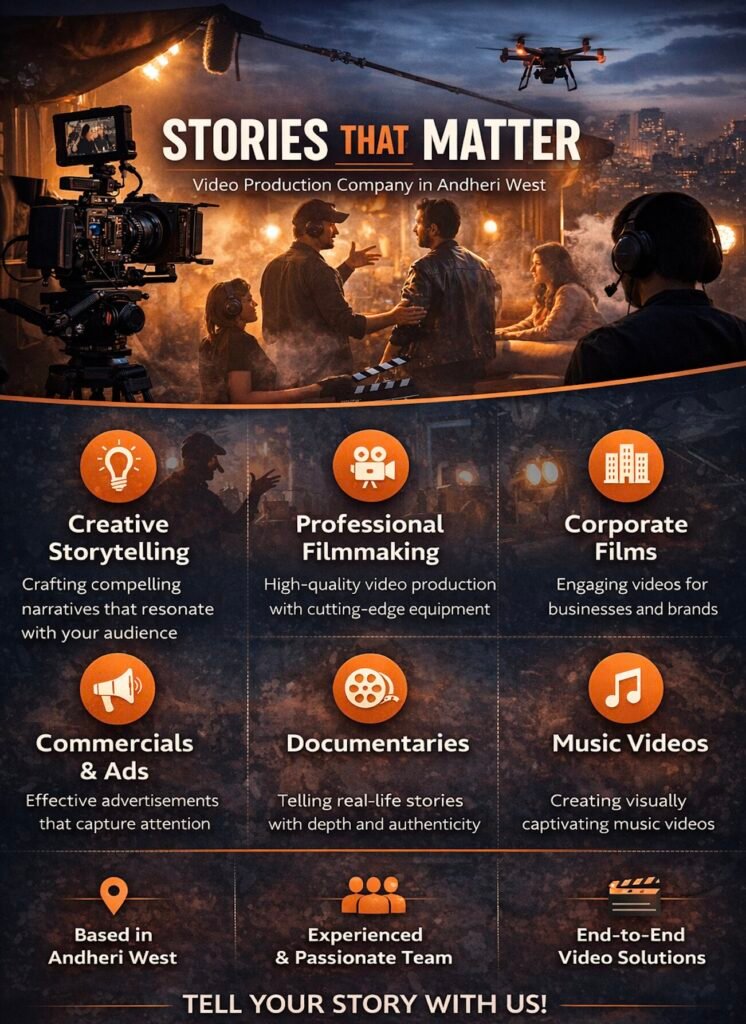
Video production services in Andheri West (what’s included)
Video production services in Andheri West (what’s included)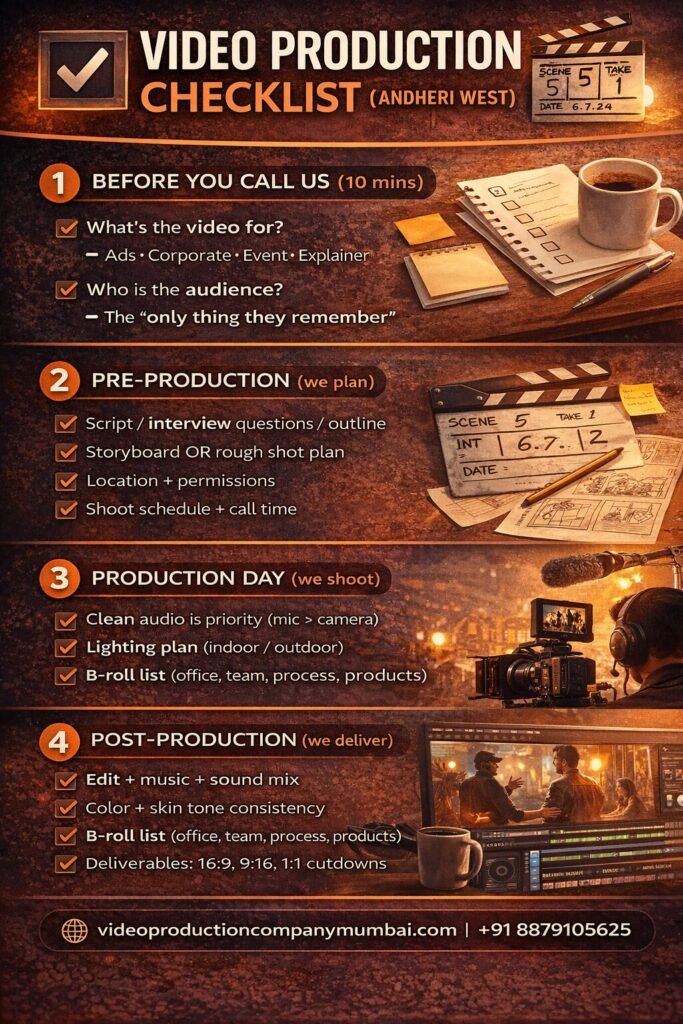
Most buyers get confused here because people use “video production” to mean anything from only editing to full ad film.
What “included” usually means in practical terms
Discovery + creative brief (what the video must achieve)
Script or structure (even if it’s a simple voiceover outline)
Shoot plan (locations, timing, equipment, crew)
Filming (camera + lighting + audio)
Editing + basic polish (music, color, titles)
Deliverables (formats + cutdowns + captions if needed)
scripting + storyboarding + shoot + edit (end-to-end)
This is the cleanest option when you want one team responsible for everything.
Real-world scenario:
You’re launching a service in Andheri West and need:
1 main brand film (60–90 sec)
3 short ads (15 sec each)
6 reels (8–12 sec hooks)
End-to-end makes sense because the script is written with the edit in mind, so you don’t waste shoot time on useless shots.
Things people usually get wrong
They skip scripting to “save money” → then waste time on shoot day → then pay more in edits.
only editing / post-production projects
Choose this when you already have footage but it needs to look professional.
Good editing-only teams will ask:
What platform? (YouTube, Instagram, website, pitch deck)
Any references you like?
Do you need captions, versions, or voiceover?
Common mistake: Sending random clips with no structure and expecting “magic.” Editing can’t fix missing story — it can only improve what exists.
corporate video production in Andheri West (what corporate films include)
Corporate doesn’t mean boring. Corporate means the video has a business goal: trust, clarity, hiring, training, investors, or sales enablement.
company profile / brand story / presentation films
This is the classic “who we are” video — but the modern version is tighter.
What a strong corporate film includes
Your “why” in one line (no long history lecture)
Proof: numbers, process, people, clients, outcomes
Simple structure: problem → solution → proof → next step
Expert tip: Start with the viewer’s problem, not your founder story.
training videos / internal communication / CSR / e-learning
These videos win when they are clear, not flashy.
What to ask for:
chapter-wise structure (modules)
on-screen text for key steps
screen recording + presenter (if needed)
clean audio + readable visuals
Common mistake: No teleprompter or script → speaker rambles → editing becomes painful.
event / multi-camera coverage
Event coverage is not “just recording.” You usually need:
multi-camera angles (stage + audience + wide)
clean audio feed (mixer output + backup mic)
highlight aftermovie + full sessions (separate deliverables)
Pro move: Ask for a “key moments list” so the editor knows what to prioritize.
ad film makers in Andheri West (TVC + digital ads)
Ads are about attention + clarity + conversion, not cinematic slow motion.
30–45 sec ad films (digital-first)
Best for Meta/YouTube/OTT-style campaigns.
What makes digital ads work:
hook in first 1–2 seconds
one message per ad
captions baked in (most people watch on mute)
multiple versions (different hooks)
Things people usually get wrong
Trying to fit 8 messages in 30 seconds → nobody remembers anything.
TV commercials (concept → storyboard → shoot → post)
TVCs demand tighter planning:
concept + script + storyboard approved before shoot
bigger crew, art direction, continuity
higher expectations in lighting, sound, and finishing
Tip: Even if you’re not running TV, TVC-style planning improves quality massively.
social media reels and short-form video production in Andheri West
Short-form is not “cheap content.” It’s high iteration content.
reels / promos / testimonials / short explainers
What to ask for:
10–20 hook ideas (you pick the best)
batch shooting plan (half-day/full-day)
templates for captions + lower-thirds
consistent brand look (fonts, colors, pacing)
Common mistake: One reel at a time. Batch production saves money and keeps quality consistent.
product video shoot in Andheri West (studio vs on-location)
Product videos fail when lighting is wrong and details aren’t visible.
product demo / product films
Best for: ecommerce, Amazon listings, website landing pages.
Ask for:
clean close-ups (textures, labels, features)
benefit-focused visuals (not only beauty shots)
1 long demo + cutdowns
product + lifestyle shoots (brand look)
This is where storytelling matters: product in real use, real context.
Expert tip: Decide your brand vibe early: premium/minimal, bold/youth, clinical/trust. That choice controls props, lighting, and locations.
motion graphics and animation explainer video services in Andheri West
Use motion graphics when you need clarity fast: processes, apps, services, concepts.
motion graphics
Great for:
typography-driven brand videos
data overlays (stats, timelines, steps)
UI mockups and transitions
Ask for:
styleframes (3–5 sample screens) before full animation
voiceover + music licensing clarity
animated explainers
Best for:
SaaS products
services that can’t be filmed easily
training modules
Common mistake: Starting animation without final script. Animation changes are expensive once production starts.
video editing and post-production studio in Andheri West (what you get)
If your content already exists, post-production is where it becomes watchable.
editing + color grading
Good editing = structure + pacing + clarity.
Good grading = consistent skin tones + balanced look.
Ask for:
one “look” reference (warm, neutral, high-contrast, etc.)
clean cuts (remove filler, tighten sentences)
sound design / mixing + music/SFX
Audio is the difference between “amateur” and “professional.”
Minimum expectations:
dialogue clarity
noise reduction
music that doesn’t overpower voice
safe levels for YouTube/Instagram
VFX / CGI / compositing
Use this when you need:
screen replacements
cleanup (remove objects, fix distractions)
product glam enhancements
believable composites
Tip: Get clarity on what is “included” vs “optional” in VFX. Small changes can add big time.
video production process in Andheri West (pre-production to post-production)
A smooth process is the real “premium.”
pre-production (script, storyboard, planning, location)
This is where you save money.
finalize script
storyboard or shot list
location permissions (societies can be strict)
schedule, call sheets, approvals
production (crew, filming, lighting, audio)
On shoot day, you want zero confusion:
roles defined
backup plan for weather/traffic
audio backups
clear approval person (one decision-maker)
post-production (edit, graphics, sound, final masters)
A clean workflow looks like:
first cut (structure)
second cut (polish)
final cut (captions + deliverables + exports)
Common mistake: Too many people giving feedback. Pick 1–2 approvers or revisions never end.
what equipment and crew do Andheri West video production companies use
Gear matters, but the operator matters more.
cameras + lighting + audio
Expect some combination of:
cinema/mirrorless cameras (depending on budget)
soft lights for flattering faces
lav mics + boom mics for clean sound
Tip: If they don’t talk about audio, push back. Your brand can’t look premium with noisy voice.
drones / gimbals / teleprompter / studio floor (when needed)
Use these when they solve a problem:
drone: establishing shots, real estate, campuses
gimbal: smooth walk-throughs
teleprompter: founder/CEO lines without rambling
studio floor: controlled product shoots
how long does it take to produce a corporate film or ad film in Mumbai
Timelines aren’t “fixed.” They depend on approvals and complexity.
typical timelines for 30-sec ads vs corporate films
30-sec digital ad: ~7–21 days
corporate film (60–120 sec): ~2–6 weeks
event aftermovie: ~3–10 days (depending on deliverables)
what makes timelines longer (locations, approvals, post complexity)
multiple locations + permissions
heavy motion graphics/VFX
slow approvals (biggest delay)
too many versions requested late
Expert tip: Lock script and deliverables before shoot. That’s how you protect timeline.
video production cost in Andheri West (what changes the budget)
If you want a realistic budget, think in drivers, not “per minute.”
shoot days + locations + cast/crew scale
Costs rise with:
more shoot days
multiple locations (travel + setup time)
bigger crew (DP, assistants, art, makeup)
actors/models and styling
animation/VFX level + deliverables/versions
Budget increases when you ask for:
advanced animation
multiple language versions
many cutdowns across platforms
heavy retouching/CGI
Things people usually get wrong
They forget deliverables, then add them later → cost jumps.
Write down every version you need at the start.
revisions, versions, and handover files (how edits usually work)
This is where misunderstandings happen.
revision rounds (what’s typical)
A normal structure:
1 round: big changes (structure, scenes)
1 round: fine changes (text, trims)
final: export + delivery
If you want unlimited revisions, be ready to pay for the time. Simple.
versioning for departments/platforms
Versioning examples:
Sales version (more proof)
HR version (culture/hiring)
Instagram version (fast hooks + captions)
YouTube version (slower pacing + more explanation)
Tip: Ask for a naming system for files so your team doesn’t lose track.
deliverables you should ask for (formats, cutdowns, subtitles, aspect ratios)
Deliverables are the “real output,” not just one MP4.
masters + platform cutdowns (9:16, 1:1, 16:9)
Ask for:
Master in 16:9 (highest quality)
9:16 vertical cut (reels/shorts)
1:1 square cut (feeds)
15s / 30s cutdowns (ads)
subtitles + captions + source file expectations
Ask for:
subtitles file (SRT) or burned-in captions (depends on platform)
clean “textless” version if you want to reuse visuals
clarify source files: project files are optional and often extra
Conclusion (read this before you hire):
If you’re hiring a Video Production Company in Andheri West, Mumbai, don’t chase “best” — chase fit: clear process, proof of similar work, strong audio, written deliverables, and a revision plan. That’s how you get a video that looks good and performs.
Real Client Testimonials
Send Me My Concept in
15 Minutes
Only 3 new projects accepted this month.
FAQs of Video Production Company in Andheri West Mumbai
What kind of video content does a video production company create?
Short answer: Corporate films, ads, reels, product videos, explainers, event coverage, and post-production edits.
Detailed answer: A video production company typically covers business-focused content (corporate profile, training, testimonials), marketing content (digital ads, TVC-style films, reels), product content (demo + lifestyle), and support content (event coverage, internal comms). The best team helps you choose the right format based on your platform (Instagram vs YouTube vs website) and your goal (trust, leads, hiring, onboarding).
What is the process of a video production project?
Short answer: Brief → script/plan → shoot → edit → revisions → final exports.
Detailed answer: A normal flow starts with a creative brief (goal, audience, platform), then scripting/storyboard or shot list, then pre-production planning (schedule, locations, approvals), then the shoot (camera/lighting/audio), and finally post-production (edit, graphics, sound, captions, exports). The key is approvals: if you delay feedback, the project timeline stretches.
What is the time taken to deliver a typical project?
Short answer: Usually 1–6 weeks depending on complexity and approvals.
Detailed answer: Editing-only can be a few days to two weeks. A simple reel batch may take 1–2 weeks. A corporate film often takes 2–6 weeks. Ads can be 1–3 weeks for digital-first and longer for TVC-style. The biggest delays come from slow approvals, added deliverables, and heavy motion graphics/VFX.
Do you provide revisions, and how many are included?
Short answer: Most teams include 1–2 revision rounds; confirm it in writing.
Detailed answer: A typical revision policy includes one round for structural changes and one round for fine tweaks. Some teams charge after that, which is fair because edits take time. Get clarity on what counts as a revision (text tweaks vs new scenes) and who will consolidate feedback (too many reviewers = endless changes).
What is a production house?
Short answer: A production house is a team/company that manages video creation from planning to final delivery.
Detailed answer: A production house usually has access to crew, equipment, and workflows to deliver professional shoots and edits. Some are full-service (script to final masters), while others focus on production only (shoot) or post only (edit). The label matters less than whether they can deliver your exact outputs reliably.
What services do production houses offer?
Short answer: Pre-production, production, post-production, and deliverables/versioning.
Detailed answer: Services include scripting and planning, casting/location management, filming with crew and gear, editing and finishing (color, sound, graphics), and exporting deliverables in multiple formats. Better production houses also help with strategy: what video type to make, how to structure it, and how to create cutdowns for platforms.
How long does it take to produce a film or a 30-second commercial?
Short answer: A 30-second ad usually 1–3 weeks; bigger films 3–8+ weeks.
Detailed answer: A digital-first 30-second commercial can be quick if the script and approvals are locked. A high-production TVC-style commercial takes longer due to concepting, storyboard approvals, shoot logistics, and polishing. Films (brand/corporate) can take several weeks depending on locations, interviews, and post-production complexity.
What is the difference between film and TV production houses?
Short answer: Film houses often focus on long-form storytelling; TV production leans toward broadcast-ready workflows and formats.
Detailed answer: Film production houses may be geared toward cinematic storytelling, longer timelines, and larger crews for narrative work. TV production houses often have tighter schedules, multi-camera experience, and broadcast-oriented delivery standards. For brands, many “corporate/ad” teams borrow from both — what matters is their experience with your format and deliverables.
How do I work with an agency for my project (what are the first steps)?
Short answer: Share your goal, platform, references, deadline, and budget range — then ask for a plan + deliverables.
Detailed answer: Start with a simple brief: what you sell, who it’s for, where the video will be used, and what action you want viewers to take. Share 2–3 reference videos you like. Ask the agency to propose: concept/script approach, shoot plan, timeline, revision policy, and exact deliverables (masters + cutdowns + captions). Don’t start with “price for 2 minutes” — start with outcomes and outputs.
Do you serve clients outside your base location (remote vs on-location)?
Short answer: Yes — planning can be remote; shoots can be on-location anywhere with scheduling.
Detailed answer: Many teams handle scripting, planning, and review calls remotely, then travel for shoots when needed. For multi-location brands, a good company can standardize style so your videos look consistent across branches. Confirm travel/logistics costs upfront, and clarify who handles local permissions (especially for societies and commercial spaces).